The Anatomy of a Great Horse Property Layout (And Why Some Farms Just Don't Flow)
You can walk onto two horse properties with the same acreage, similar barns, and comparable fencing, and one feels effortless while the other feels like you're fighting it every single day.
That difference almost always comes down to layout and flow.
Horse people talk a lot about acreage, barn size, number of stalls, and fencing type. What we don't talk about enough is how everything actually works together once chores, seasons, people, equipment, and real life get involved. A property can look great on paper and still be exhausting to live on if the flow is wrong.
Barn to Paddock and Pasture Distance
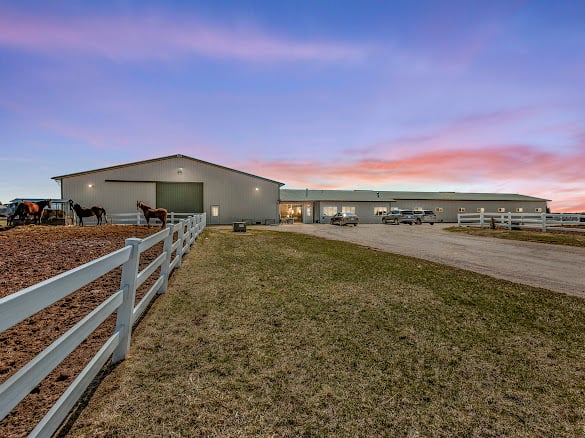
Closer is not just more convenient. It is safer, more efficient, and easier on everyone involved. Ideally, turnout areas should be close enough to the barn that daily chores don't turn into a cardio workout, especially in bad weather. Long walks to paddocks might not seem like a big deal until it's January, the wind is howling, and you're carrying water buckets or leading a horse on ice.
But distance isn't the only thing that matters here. Accessibility is huge. Can you easily get a tractor or mower into pastures without opening and closing six gates? Are pasture entrances wide enough for equipment? Are there awkward turns or tight spaces that make mowing or dragging a nightmare? Pastures that can't be maintained easily will slowly deteriorate, no matter how good your intentions are.
A good layout allows both horses and equipment to move easily without interfering with daily barn traffic.
Traffic Patterns for Tractors, Trailers, and Farm Vehicles
This is one of the most overlooked aspects of farm design, and it is where a lot of frustration starts. On a well-designed property, trailers can pull in, turn around, and park without blocking barn aisles, gates, or driveways. Hay deliveries don't require backing through paddocks or squeezing past fencing. Tractors have clear paths to manure piles, arenas, and pastures.
On poorly laid-out farms, everything overlaps. Trailers block turnout gates. Hay trucks drive through mud. Tractors cut across high-traffic horse areas. That is how accidents happen. Good flow separates horse movement from heavy equipment movement as much as possible.
Arena Placement and Why It Matters
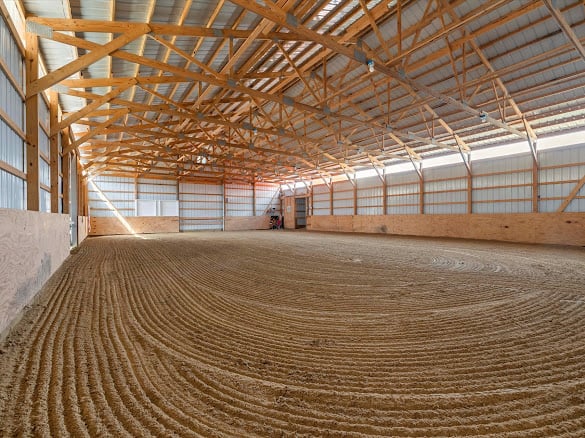
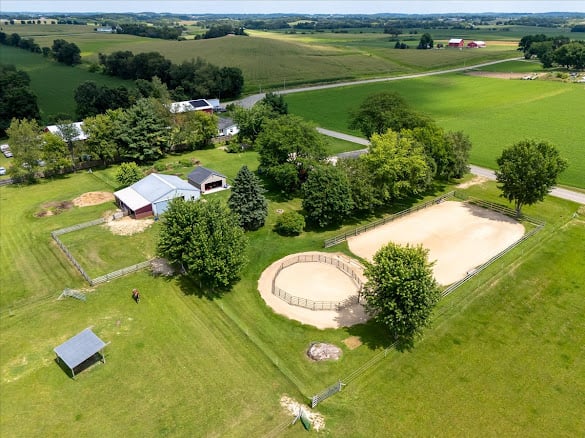
Where an arena sits can make or break a property. Arenas should be placed with drainage, wind, sun exposure, and traffic in mind. Low spots turn into mud pits. Poor orientation can mean blinding sun in winter or brutal wind year-round. Arenas too close to barns can clog traffic. Arenas too far away become inconvenient and underused.
A well-placed arena has good drainage, logical access from the barn, and enough surrounding space for equipment to get in and out. It should feel connected to the rest of the property without being in the way of daily chores. When an arena flows naturally with the rest of the layout, it actually gets used more.
Mud Control Zones and Gate Areas
If there is one universal truth among horse people, it is this: mud will find you. The worst mud almost always forms in front of gates, water sources, and high-traffic areas. A good layout anticipates this and plans for it instead of pretending it won't happen.
High-traffic zones should be designed with proper grading, footing, and drainage from the start. Geotextile fabric, gravel, screenings, and well-placed drains can turn a nightmare gate into a manageable area. If a property already has mud issues, they can often be improved, but it is much easier when the layout allows for equipment access and proper water runoff.
Hay Delivery and Storage Access
Hay day should not feel like an obstacle course. On a functional horse property, hay trucks can access storage without crossing pastures or blocking barn access. Hay can be unloaded close to where it is actually used. Storage areas should be dry, accessible year-round, and located where deliveries make sense. In winter climates especially, plowed access to hay storage is not optional.
Winter Plowing Routes
A good property layout allows for clear, logical plowing routes that keep barns, water sources, and main traffic areas accessible. You should be able to plow once and maintain access without creating snow piles in places that later turn into mud or ice. Simple, straight routes save time, money, and sanity.
Chore Flow and Worker Efficiency
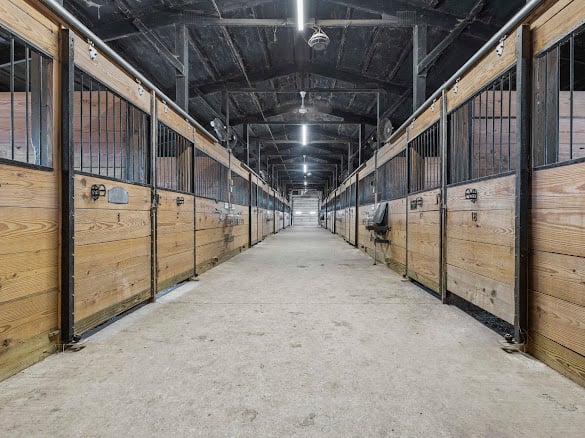
Even if you never plan to hire help, you should think like someone who does. Is it easy to clean stalls and move manure? Can wheelbarrows or carts move smoothly from stall to pile? Are water sources conveniently located so filling buckets does not involve dragging hoses through the aisle or across driveways? When chores flow well, people do them better. When chores are awkward and inefficient, things get skipped, rushed, or dreaded.
Why Some Farms Just Don't Flow
Most poorly flowing farms were not designed with horses as the primary focus. They were retrofitted, pieced together, or expanded without a long-term plan. That does not mean they are bad properties. It just means they require more effort, more management, and often more money to function smoothly.
Understanding flow helps buyers know what they are really signing up for. It also helps sellers understand why two farms with similar features can feel completely different in day-to-day life. A great horse property does not just look good. It works. And once you experience good flow, it is very hard to go back.
Whether you’re buying your first home, selling a property, or searching for the perfect farm, we're here to guide you every step of the way with honesty, exceptional service, and a seamless, stress-free experience.