How Many Acres Do You Need Per Horse in Wisconsin?
A useful starting point is about 1 to 2 acres of quality pasture per average-size horse, but that is not a law and it is not a guarantee. In Wisconsin, the right amount of land depends on local zoning, soil and drainage, pasture quality, the number and type of horses, whether you will feed hay year-round, and how much land is actually usable.
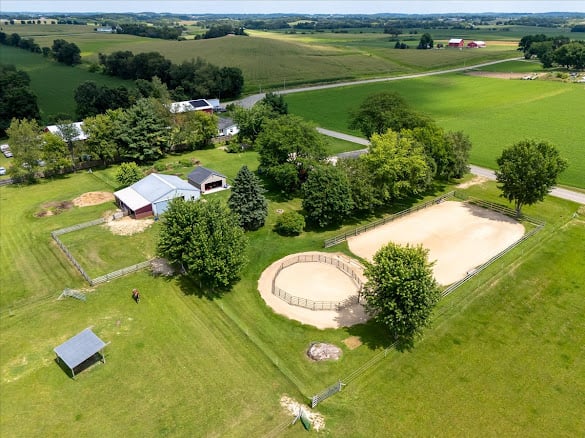
The mistake is asking only, “How many total acres does the property have?” A 10-acre parcel can function worse for horses than a well-designed 5-acre property if much of the larger parcel is wetland, woods, steep ground, driveway, buildings or chronically muddy soil.
Horse-property buyers often combine three separate questions. They should be answered independently.
This is the legal question. Wisconsin does not have one statewide minimum acreage rule for keeping a few horses. Local ordinances may set a minimum lot size, an animals-per-acre formula, a maximum number of animals, structure setbacks or no horse-specific limit at all.
Never rely on the listing description, the seller's current use or a neighbor's opinion. The PinkLady Equine Agent Academy teaches agents to start by asking which office has zoning jurisdiction over the parcel, then confirm the rules for the buyer's exact intended use.
This is the pasture-capacity question. Iowa State University Extension estimates that an average mature horse may need roughly 1 to 2 acres of excellent permanent pasture, 2 to 2.5 acres of average pasture, or 3 or more acres of thin, poorly managed sod when pasture is expected to supply most nutrition. University of Minnesota Extension similarly notes that pasture can often support approximately one horse per two acres during the grazing season, while soil, weather and management materially change the result.
That acreage must be productive pasture—not the tax-roll total. Buildings, lanes, woods, wetlands, ponds, septic areas and unusable slopes do not feed a horse.
This is the management question. Horses can be kept on smaller acreage if zoning allows it and the owner expects to purchase hay, maintain a sacrifice lot or dry lot, remove or compost manure, control mud and rotate limited grass. On small acreage, the land may function primarily as turnout rather than as a major feed source.
That can work. It is simply a more management-intensive and often more expensive system.
Wisconsin pasture is seasonal. Even a productive field does not provide year-round grazing. Freeze-thaw cycles, spring saturation, summer drought and concentrated winter use can destroy sod quickly.
A workable property should have a plan for:
If every horse must use the same low-lying paddock all winter, acreage on paper will not rescue the layout.
Before treating a property as suitable, map the parcel and subtract or flag:
Public tools such as county GIS, the USDA Web Soil Survey, Wisconsin's Surface Water Data Viewer and FEMA flood maps provide a useful first screen. They do not replace a survey, wetland delineation or on-site evaluation.
Imagine a buyer with four horses comparing two properties.
Property A: 10 total acres, but 3 acres are wooded, 2 are mapped wetland, 1.5 contain the home, barn and driveway, and the remaining turnout is poorly drained.
Property B: 6 total acres with 4 well-drained, divided paddocks, a reinforced dry lot, central water and accessible hay storage.
Property B may be the stronger horse property even though the listing advertises fewer acres.
For many Wisconsin buyers, 1 to 2 acres of good pasture per horse is a useful planning range—not a purchase rule. The right property is the one that is legal for the intended use and has enough usable, well-drained, manageable land to support the buyer's actual horse-care plan.
PinkLady Properties evaluates the farm as an operating system, not just a house attached to acreage. Before you write an offer, we help identify the zoning, land and infrastructure questions that deserve direct verification.
It can be enough for turnout if local zoning permits the horse and the owner supplies hay, manages manure and mud, and uses a dry lot. One acre is unlikely to provide reliable year-round forage.
No. A barn may predate the current ordinance, have a nonconforming status, or have been built for another use. Verify the parcel's current rules and permit history.
They count in the parcel total but usually should not be counted as productive pasture. Some wooded areas may provide turnout, shade or trails if safe and permitted.
If pasture will provide much of their forage, a rough starting range may be 4 to 8 or more productive acres. The correct figure depends on pasture quality, drainage, rotation and supplemental feeding, plus local legal limits.
Whether you’re buying your first home, selling a property, or searching for the perfect farm, we're here to guide you every step of the way with honesty, exceptional service, and a seamless, stress-free experience.