Can I Legally Keep Horses on This Wisconsin Property?
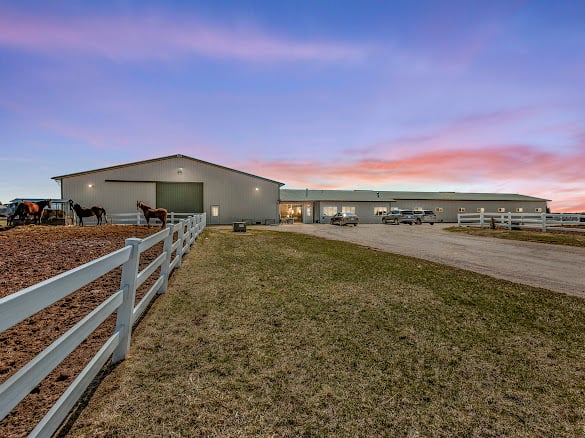
Maybe—but acreage, an existing barn and even horses currently standing on the property do not prove that your intended horse use is legal. In Wisconsin, horse rules are often local. A parcel may be governed by county zoning, town zoning, both in different ways, or special shoreland and floodplain rules.
The only dependable method is to identify the correct authority and verify the rules for the parcel, the number of horses and the intended activity.
An existing use can be misleading for several reasons:
One of the most dangerous phrases in rural real estate is, “They have always done it.” History is a clue—not proof.
Ask the county zoning office: “Who has zoning jurisdiction over this parcel?” Then verify whether the town has separate authority and whether shoreland, floodplain, subdivision or deed restrictions also apply.
The Wisconsin DNR specifically warns that some rural-residential districts may prohibit livestock or restrict the size of livestock operations. It recommends contacting local authorities to understand allowed uses and permits before purchase.
Give the zoning administrator the parcel number or address and describe the intended use precisely. Ask:
Ask for the answer in writing when it is material to your decision. A helpful phone conversation should be documented by email or supported with the ordinance and permit record.
Keeping your own two horses is not the same land use as boarding 12 client horses, giving daily lessons, employing staff or hosting weekend shows. The physical property may look identical, but traffic, parking, signage, hours, manure volume and public activity can trigger a different zoning analysis.
If income will be generated, say so. Calling a boarding business “just keeping horses” does not make the use private.
Wisconsin has statewide livestock-facility siting rules, but those rules do not erase local zoning questions for ordinary horse properties. Most residential and small commercial equine buyers will face parcel-specific local limitations long before they approach the scale contemplated by large livestock-facility rules.
The practical rule is simple: do not use a large-operation threshold as a substitute for reading the ordinance that governs your parcel.
If a seller says the property is grandfathered, ask for:
Do not assume a historic private stable authorizes a new commercial boarding operation. Do not assume a nonconforming use survives every interruption, expansion or ownership change.
If horse use is essential, verification should occur before the buyer becomes fully committed. Depending on the transaction and advice from the buyer's real-estate licensee or attorney, the offer may need contingencies addressing zoning, building feasibility, permits, wetlands, financing or the buyer's specific proposed use.
A verbal “should be fine” after closing has no value if the buyer cannot keep the horses or build the shelter they need.
Do not buy a Wisconsin horse property based on visual evidence. Verify what is allowed, at what scale, in which structures and for whose horses. That one discipline prevents some of the most expensive mistakes in equine real estate.
PinkLady Properties makes the preliminary calls and helps buyers frame the right questions. When an answer could decide the purchase, we also want the buyer to obtain it directly and in writing from the responsible authority.
There is no single statewide minimum that answers every residential horse-keeping situation. Local zoning and other restrictions can set parcel-specific requirements.
Not necessarily. The district's permitted and conditional uses still matter, and private horse keeping may be treated differently from a commercial equine operation.
Yes. Private covenants and deed restrictions can impose limits beyond public zoning. Review the title commitment and recorded documents.
Use it as a starting point, not final authority. Material answers should come from the governing office and be documented. Attorneys, surveyors or other professionals may be needed for complex issues.
Whether you’re buying your first home, selling a property, or searching for the perfect farm, we're here to guide you every step of the way with honesty, exceptional service, and a seamless, stress-free experience.