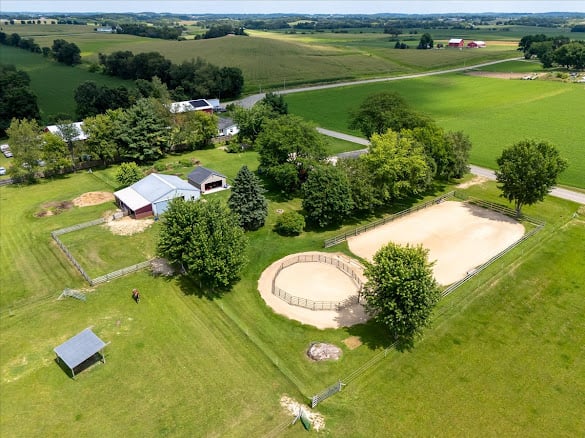
Preparing to Bring Your Horses Home for the First Time
Buying your first horse property is one of the most exciting moments you’ll ever experience. After months of scrolling listings, scheduling showings, writing offers, negotiating inspections, waiting on underwriting, and finally hearing those magical words, “You’re clear to close,” it finally feels real.
You have the keys.
The property is yours.
Now comes the fun part… right?
Well… yes and no.
One of the biggest misconceptions I see is that once closing day arrives, the hard work is over. In reality, I almost think that’s when the real work begins.
You’ve spent months preparing to buy the property, but have you spent any time preparing the property for your horses?
As horse people, we tend to get caught up in the excitement. We start planning where everyone’s stalls will be, what color we’re going to paint the tack room, where the manure pile should go, and which pasture our favorite horse is going to claim first.
Meanwhile, there are dozens of little things that are incredibly easy to overlook until your horses are already standing in the pasture.
So before you hook up the trailer, here are some things I’d encourage every new horse property owner to think about.
And I mean every inch.
Don’t assume the fence is safe simply because the previous owners had horses there.
Walk the entire perimeter.
Check every post.
Open every gate.
Test every latch.
Look for loose boards, sagging wire, broken insulators, exposed nails, old barbed wire hidden in the weeds, holes dug by wildlife, rotten posts, and places where horses could potentially get themselves into trouble.
Every horse is different. Just because the previous owner’s horses respected the fence doesn’t mean yours will.
One of the biggest mistakes I see is people assuming that green grass automatically means healthy pasture.
Take time to really inspect it.
Are there toxic plants growing?
Any water hemlock?
Buttercups?
Poisonous weeds?
Are there maple trees hanging over the fence that could drop wilted leaves?
Any old junk piles hidden in tall grass?
Groundhog holes?
Broken fencing buried in the weeds?
You’ll also want to evaluate your pasture itself.
Is it overgrazed?
Would rotational grazing help?
Does it need reseeding?
Would a soil test be beneficial?
Healthy pasture is one of the best investments you can make for your horses.
This sounds obvious, but you’d be surprised how often it gets forgotten.
Turn every water hydrant on.
Check your automatic waterers.
Plug something into every electrical outlet in the barn.
Flip every light switch.
Make sure your GFCI outlets reset properly around water.
Locate your electrical panel.
Know where your water shutoff is.
If something doesn’t work, you’ll want to know before you’re standing in the barn at 9:00 at night wondering why the water stopped flowing.
This is Wisconsin.
Winter is not an “if.”
It’s a “when.”
Ask yourself…
Do I have enough hay storage?
Have I already found a reliable hay supplier?
Where will bedding be stored?
Do I have frost free hydrants?
Will I need heated buckets?
Should I install automatic waterers?
What happens if my well loses power?
Do I have a backup generator?
Can I plow my driveway if we get two feet of snow overnight?
Can my hay supplier actually get to my barn during the winter?
These aren’t fun things to think about in July.
They’re even less fun to think about during a blizzard.
This might honestly be my biggest piece of advice.
Don’t wait until your horse is colicking at two in the morning to start calling veterinarians.
Before your horses even unload, establish relationships with local professionals.
Find a primary veterinarian.
Find an emergency veterinarian.
Know where the nearest equine hospital is.
Introduce yourself to a farrier.
Locate a feed supplier.
Find a reliable hay producer.
Know who services tractors.
Know a plumber familiar with agricultural properties.
Know an electrician who understands barns.
Trust me… someday you’ll need every single one of them.
If you’re bringing a new horse home to horses you already own, have a quarantine plan.
Can you separate them?
Separate feed tubs?
Separate water buckets?
Separate equipment?
Do you have a pasture where they won’t have direct nose to nose contact?
Nobody likes thinking about disease until it’s standing in your barn.
Having a quarantine plan beforehand is much easier than scrambling afterward.
We see a barn differently than they do.
We’re looking at how pretty it is.
They’re looking for creative ways to hurt themselves.
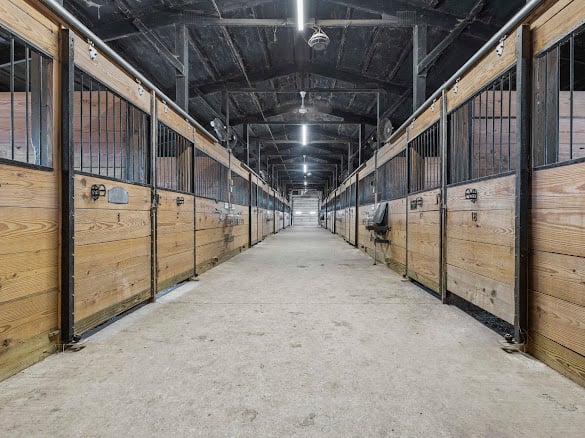
Check for exposed screws.
Sharp metal edges.
Loose boards.
Broken stall latches.
Old baling twine.
Dangling extension cords.
Loose electrical wiring.
Broken windows.
Rusty nails.
Poor ventilation.
If something catches your eye, chances are it’ll catch theirs too.
Owning a horse property means becoming your own barn manager.
Sometimes it’s easy to focus on the exciting parts while forgetting the everyday responsibilities.
Start putting together your routine now.
Keep a vaccination schedule.
Keep track of deworming.
Schedule dental work.
Keep your farrier appointments on the calendar.
Maintain Coggins paperwork.
Keep health records organized.
Test your well water if needed.
Know when your septic system should be inspected.
Create a manure management plan.
None of these things are glamorous, but they’re all part of responsible horse ownership.
Hopefully you’ll never need it.
But if you do, you’ll be glad it’s already there.
Your first aid kit should include bandaging supplies, wound care essentials, a thermometer, antiseptic solution, gloves, scissors, and emergency contact information.
Write important phone numbers somewhere everyone can see them.
Your veterinarian.
Emergency veterinarian.
Farrier.
Neighbors who can help.
Have fire extinguishers in the barn.
Keep halters and lead ropes easily accessible.
Think through emergency evacuation plans before they’re ever needed.
Horse ownership doesn’t stop at fences and feed.
Review your insurance policy carefully.
Make sure your barns, fencing, equipment, and liability are properly covered.
If you plan on boarding horses, giving lessons, leasing horses, or allowing people to ride on your property, consider speaking with an attorney about liability protection and the proper business structure.
It’s also worth understanding your zoning regulations before making changes to your property.
Adding an arena, building another barn, or starting a boarding business may require permits depending on where you live.
Here’s something I wish more people understood.
Very few horse farms are perfect on day one.
Almost every property evolves over time.
You’ll replace fencing.
You’ll improve pastures.
You’ll build another run in.
You’ll move gates.
You’ll add a wash rack.
You’ll eventually find yourself saying, “I wish they would’ve built this differently.”
That’s completely normal.
Your farm doesn’t have to be finished the day your horses come home.
It just has to be safe.
The rest can come with time.
Buying your horse property is only the beginning of your journey. Preparing it for your horses is where your next chapter really starts.
While we may just be your Realtors, we’re horse gals ourselves. We understand the excitement, the nerves, the late nights planning your dream farm, and the endless list of things that suddenly need your attention. We’ve learned plenty of lessons ourselves over the years, and we’re always happy to share what we’ve learned.
If you ever have questions, whether they’re about buying, selling, fencing, pastures, hay, local resources, or anything in between, don’t hesitate to reach out. If we don’t know the answer, chances are we know someone who does.
At the end of the day, we’re not just here to help you buy a horse property.
We’re here to help you make it feel like home.

Whether you’re buying your first home, selling a property, or searching for the perfect farm, we're here to guide you every step of the way with honesty, exceptional service, and a seamless, stress-free experience.